

 Home
Home

As we all know, the aesthetics industry moves fast. This can make it difficult for practitioners to keep up with every new device that hits the market. At Beauty and Health Institute in Tampa, we believe that staying ahead of the curve is part of our responsibility to our students and the professional community. When we evaluate technology for our curriculum, we look at durability, clinical results, and how a tool performs in a treatment room. For a long time, the SkinPen was a staple in our tool kit, and it remains a respected device in the industry. However, we have since transitioned to the CollagenPIN for our training and clinical services. Understanding the nuances of CollagenPIN vs SkinPen helps professionals make informed decisions about the investments they make.
The Technical Foundation of Automated Microneedling
Professional microneedling, or percutaneous collagen induction therapy, relies on the body’s innate ability to repair itself after a controlled injury. For those working in the field, the choice of device impacts how effectively those injuries are created. Both the CollagenPIN and the SkinPen are high-quality, motorized instruments that utilize sterile needle cartridges to create thousands of micro-channels per second.
Anaylzing CollagenPIN vs SkinPen
When we analyze the CollagenPIN vs SkinPen from a technical perspective, we are looking at the motor’s power, the needle configuration, and the ease of use for the practitioner. The goal is always to create vertical channels without causing unnecessary tearing or epidermal dragging. This technical precision is what separates professional-grade tools from the lower-quality pens often found on the consumer market.
Professional Standards in Device Design
Safety and sanitation are the top priorities for any licensed esthetician or medical professional. The SkinPen set a high bar for the industry by being the first microneedling device to receive FDA clearance. This established a standard for preventing cross-contamination with a sealed motor housing and a specific cartridge design.
The CollagenPIN also meets rigorous standards for safety and clinical performance. It was designed to provide professionals with more granular control over the treatment process. When comparing CollagenPIN vs SkinPen, the difference often comes down to the preferences of the provider regarding the handpiece weight, the vibration level, and how the needle depth is adjusted during a procedure.
Mechanical Specifics of the SkinPen
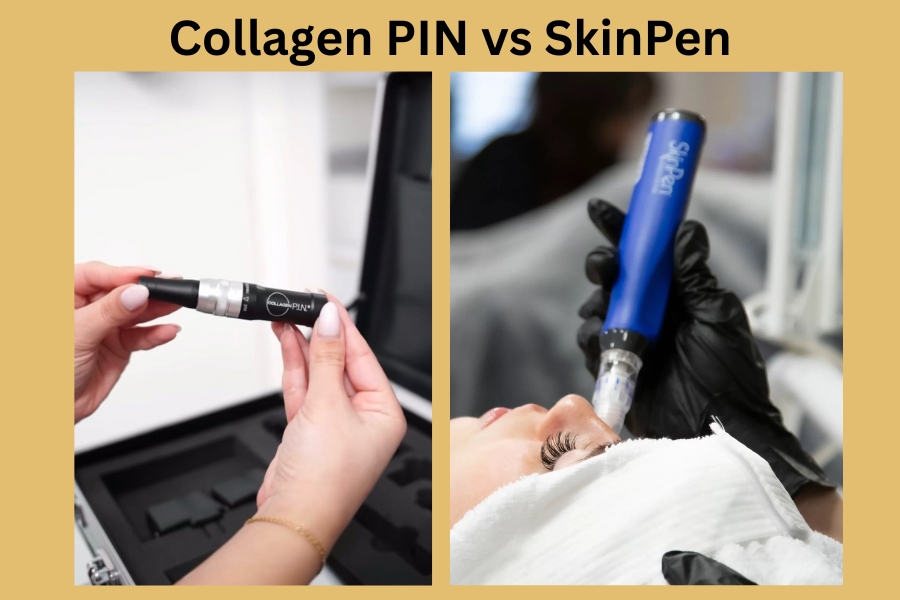
The SkinPen is often the first device professionals encounter during their initial training. It uses a 14-needle cartridge made of high-quality stainless steel. The device is battery-operated, which offers a level of mobility that many practitioners appreciate because there are no cords to manage during the treatment.
In a clinical setting, the SkinPen provides a very consistent experience. The needle depth is adjusted on the handpiece, allowing the provider to move between different settings for various areas of the face and body. It is a reliable workhorse that has a long history of proven safety data, making it a safe bet for many new practices.
SkinPen Technical Attributes:
- 14-needle medical-grade stainless steel cartridge.
- Cordless, battery-powered design for easy movement.
- Simplified depth adjustment for standard protocols.
Mechanical Specifics of the CollagenPIN
Our transition to the CollagenPIN at our Tampa institute was driven by a desire for greater clinical flexibility. The CollagenPIN is a corded device, which we have found provides a more consistent power output to the motor. This prevents the needle speed from dipping if a battery starts to lose its charge during a long day of back-to-back appointments.
The most notable difference in the CollagenPIN vs SkinPen comparison is the needle count. The CollagenPIN utilizes a 36-pin cartridge. This higher density of needles allows the practitioner to create more micro-channels with fewer passes, which can improve the efficiency of the treatment. For a busy professional, the ability to perform a thorough treatment in less time is a significant advantage.
CollagenPIN Technical Attributes:
- 36-pin needle cartridge for increased channel density.
- Corded power source for consistent motor performance.
- High-speed motor capable of up to 3,000 RPM.
Practical Application and Workflow Differences
In a professional environment, the “flow” of a treatment matters almost as much as the device’s specs. One of the reasons we prefer the CollagenPIN for our students is the way the depth is adjusted. With the PIN, a practitioner can change the needle depth while the device is running.
When you are moving from a bony area like the forehead to a fleshier area like the cheeks, being able to dial the depth up or down without stopping the motor allows for a more fluid treatment. The SkinPen generally requires a bit more intentionality when changing settings. While this might seem like a small detail, it changes the rhythm of the service and how the practitioner interacts with the skin.
Evaluating Needle Density and Skin Response
There is a frequent debate in the industry regarding needle density. Some providers prefer fewer needles, like the 14-pin setup on the SkinPen, because they feel it allows for deeper penetration with less resistance. Others argue that the 36-pin setup of the CollagenPIN provides a more uniform “stamp” and more opportunities for collagen induction.
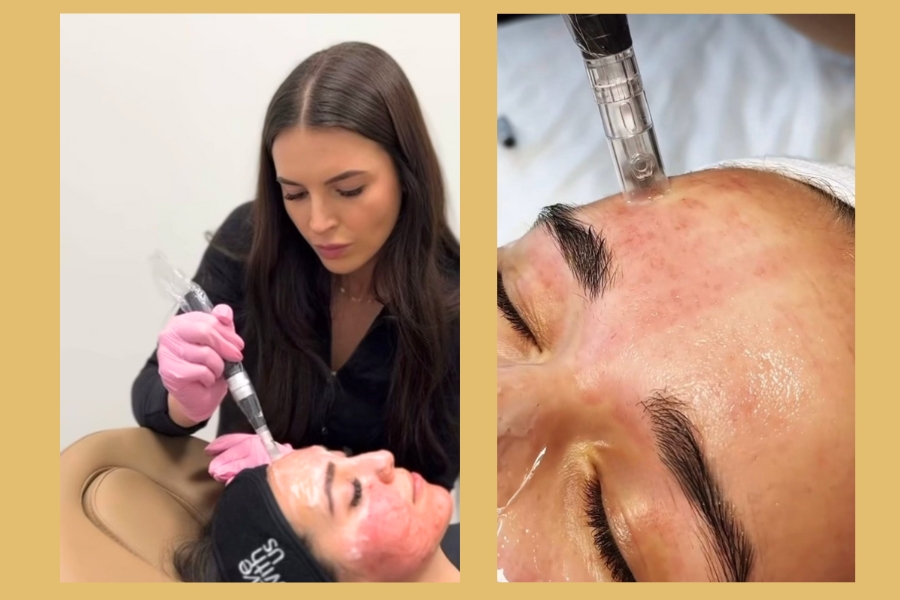
Through our clinical experience, we found that the 36-pin system allows for a very even distribution of micro-injuries. This is particularly helpful when treating larger surface areas like the décolleté or for addressing widespread texture issues. It gives the practitioner a high level of confidence that they are achieving the necessary “clinical endpoint” of erythema and pinpoint bleeding without overworking the skin.

Training Professionals for Success
As a Tampa esthetician school, our goal is to prepare students for the realities of a modern medical spa or dermatology office. When we look at CollagenPIN vs SkinPen, we want our students to understand the “why” behind the technology. We chose the CollagenPIN because it challenges students to master a high-performance tool that requires precision and a steady hand.
Learning on a corded device also teaches students about cable management and maintaining a sterile field. While both devices are excellent, we believe the versatility of the Collagen PIN gives our graduates a competitive edge because they are used to working with a device that offers such a wide range of settings and high needle density.
Managing Client Expectations and Results
Part of being a professional is knowing how to explain these tools to a client. Regardless of the device used, the goal is to explain that results are cumulative. When discussing CollagenPIN vs Skin Pen with clients, the focus should remain on the clinical outcomes rather than just the brand name of the pen.
Clinical Outcomes to Monitor
- Improvement in the appearance of fine lines and wrinkles.
- Reduction in the visibility of hypertrophic or atrophic scars.
- More even skin tone and improved overall radiance.
Professional Post-Care Guidance
A major part of the professional’s job is managing the inflammatory response. Practitioners must be well-versed in the specific serums and topicals that can be used during and after the microneedling process. We teach our students that the device creates the channels, but the post-care protocol often determines how well the skin heals and how much the client enjoys their results.
Making the Best Choice for Your Practice
Choosing between these two industry leaders often comes down to personal preference and the specific needs of your clientele. If you value a cordless design and a brand with the longest history of FDA clearance, the SkinPen is a great choice. If you prefer the power of a corded motor and the efficiency of a higher needle count, the CollagenPIN is an exceptional tool.
At Beauty and Health Institute, we are proud to offer our students and clients the benefits of the CollagenPIN. We have seen firsthand how this technology can transform skin and provide a reliable platform for professional growth. If you are a professional in the Tampa area looking to expand your skills or a prospective student ready to start your journey, understanding the nuances of these devices is the first step toward mastery in the field of aesthetics.